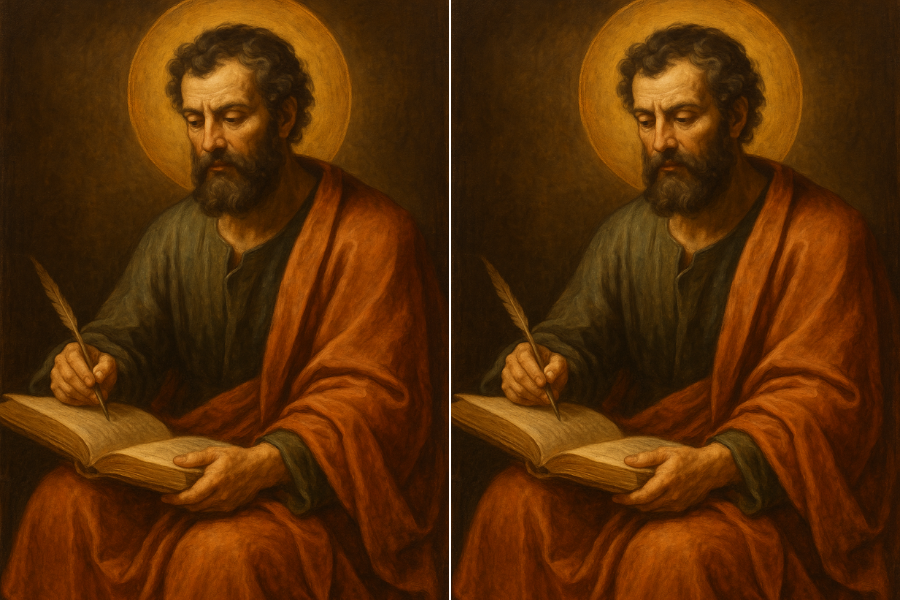
Saint Luke was more than a Gospel writer — he was a physician, an artist, and a faithful friend who captured the mercy of God in every word he wrote. Through his eyes, Saint Luke invites us to see Jesus not as a distant figure, but as a healer who meets us in our brokenness.
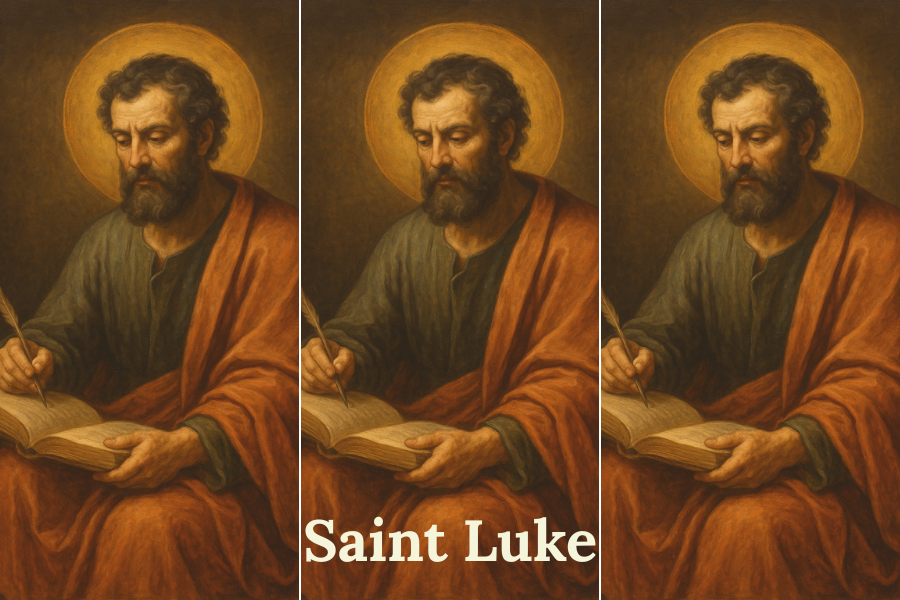
When we open the Gospel of Luke we’re not just reading Scripture — we’re stepping into the heart of a man who saw the world through the lens of mercy.
Saint Luke was one of the Twelve Apostles, but also his influence on Christianity is undeniable. He was a physician, a storyteller, an artist, and above all, a faithful disciple who used his gifts to bring Christ to life on the page.
A Greek, a Gentile, and a Believer
Unlike most of the New Testament writers, Luke wasn’t Jewish. Tradition tells us he was a Greek from Antioch in Syria, likely a Gentile convert.
That detail matters — because Luke saw the Gospel from the outside looking in. He knew what it felt like to be on the margins, and that perspective shaped his writing. His Gospel constantly highlights the poor, the outcast, and the sinner who thinks they’ve gone too far.
“For the Son of Man came to seek and to save that which was lost.” – Luke 19:10
In a divided world, Luke’s message was — and still is — revolutionary:
Salvation is for everyone.
The Beloved Physician
Saint Paul affectionately calls him “the beloved physician” in Colossians 4:14, and that phrase captures Luke perfectly.
Luke was a doctor — a man who understood pain, sickness, and the fragility of life. That background shines through in his Gospel.
He notices details others might miss: the trembling of the woman healed by Jesus’ touch, the compassion in the story of the Good Samaritan, the physical exhaustion of Christ in Gethsemane.
Luke saw healing not just as medicine, but as a form of mercy.
He shows us that Jesus doesn’t only cure bodies; He restores hearts.
“Christ heals the soul first, and the body follows.”
The Loyal Companion of Saint Paul
Luke wasn’t only a writer — he was also a missionary and a friend. He joined Saint Paul on his missionary journeys, facing storms, shipwrecks, and persecution.
In the Acts of the Apostles, Luke occasionally writes “we,” quietly stepping into the narrative himself:
“We set sail from Troas…” – Acts 16:10
He was there for the journeys and the hardships — and most importantly, he was there at the end. When Paul wrote from prison, he said:
“Only Luke is with me.” – 2 Timothy 4:11
That’s loyalty. That’s love. Luke reminds us that discipleship isn’t just preaching — sometimes it’s staying.
The Gospel and Acts: One Story, Two Volumes
Luke wrote more of the New Testament than any other single author. His two works — the Gospel of Luke and the Acts of the Apostles — tell one continuous story of God’s mercy in motion.
The Gospel reveals who Jesus is — the compassionate Savior who welcomes sinners and heals the broken.
Acts reveals what Jesus continues to do through His Church — spreading His mercy through the power of the Holy Spirit.
Luke’s Gospel gifts us with some of the most beloved parables:
-
The Good Samaritan
-
The Prodigal Son
-
The Pharisee and the Tax Collector
-
The Road to Emmaus
Every story drips with compassion. Every encounter points to grace.
“Rejoice with me, for I have found my sheep that was lost.” – Luke 15:6
In a culture obsessed with perfection, Luke’s Gospel whispers truth:
God’s mercy never runs out.
Luke the Artist and Patron of Beauty
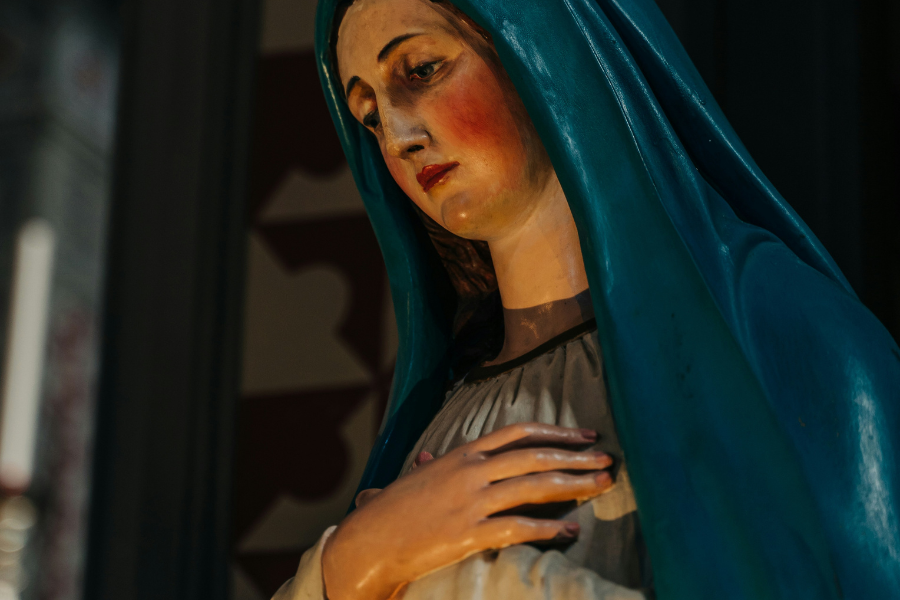
Tradition holds that Luke was also an artist, said to have painted the first images of the Virgin Mary.
Whether true or not, it’s fitting. His Gospel itself is art — full of color, emotion, and light. He painted not with a brush, but with words.
That’s why Luke is the patron saint of artists, physicians, and writers.
He found holiness in beauty, truth in detail, and God in the ordinary.
“The artist must be in love with truth before he can show beauty.”
His Death and Legacy
The exact details of Luke’s death are uncertain. Some traditions say he died peacefully in Greece; others claim he was martyred. Either way, he spent his life preaching Christ until the very end.
His relics are venerated in Padua, Italy, and Constantinople, but his real legacy is written in the pages of Scripture.
Every time someone reads the Gospel of Luke or the Acts of the Apostles, his witness lives on.